
How to Learn a Language on Your Own (Part 2)
Welcome back to this short and sweet 2 Part series where I discuss how to learn foreign languages. I recommend reading Part 1 first, but as a quick summary, input and continuous exposure is key. Having already delved into how languages are acquired, I’m now going to turn that information into some practical advice on how to learn a language on your own!
As always, these posts are based on my own experiences with language learning, particularly as someone whose goal is to achieve fluency. This guide just goes over the basics and is not meant to be comprehensive.
Step 1. Familiarisation
Familiarisation is a key step that people tend to overlook. Although we’re tempted to throw ourselves into learning “hello, how are you”, that information won’t be easily retained if we haven’t taken time to soak in the language first.
At this stage, our goal isn’t to learn even a single word; we’re just getting our brains used to the melody, sound and look of the new language so that when we do start learning it, it won’t feel as foreign to us and will be easier to decipher later on.
Start by spending 10 minutes with the language every day. You can choose any material you like, whether it’s a movie, a podcast, a book, or something else. Appreciate the new sounds, what the words look like, or simply use it as background noise while doing other tasks.
If you think you’d recognise the language if you heard it out in the wild, you’re ready for the next step!
Note: For languages with different writing systems (Japanese, Greek), I’d suggest learning the basics of that as soon as possible. I may go into more detail about how to do this in a future post, but some ideas would be flashcards and practice sheets. It’s mostly just a matter of memorisation and practice.
Step 2. Listening
Now we’re going to differentiate between two types of listening:
Passive listening: listening to something while doing something else, or reading something without worrying about understanding it. (This is what you were doing in the familiarisation phase.)
Active listening: being consciously immersed in what you’re listening to, and trying your best to understand it.
Most of the time, you should focus on passive listening. But once or twice a week, sit down for an active listening session and see how much it boosts your comprehension and retention!
Of course, if you’re just starting out, you’re not going to understand anything. So how do you start understanding things as a complete beginner? Learn the most common words first. You can look up lists of them online, but a more natural way to do this is by studying the content you’re already listening to.
Pick a small piece of media, e.g. a chapter in a kid’s audiobook. After a few active listens, you should catch a recurring word or two. Translate those and give them a visual association in your head. Then, the next time you listen to it, pay close attention to see if those words pop up again. Every time you hear them, visualise their meaning.
By doing this, you’re not only learning new words but tuning your ear to these nuances in the language and training you to identify patterns in it. This will come in super handy when you start inventing your own sentences.
Just to be clear, it’s completely fine–essential even–to use a translator to learn new words and phrases as a beginner. The important part is how you retain them afterwards.
Instead of associating a word with its translation, associate it with an image or gesture. This can be tricky with words like “the” and “is”. For those, just try to see them within the context of a full sentence rather than on their own.
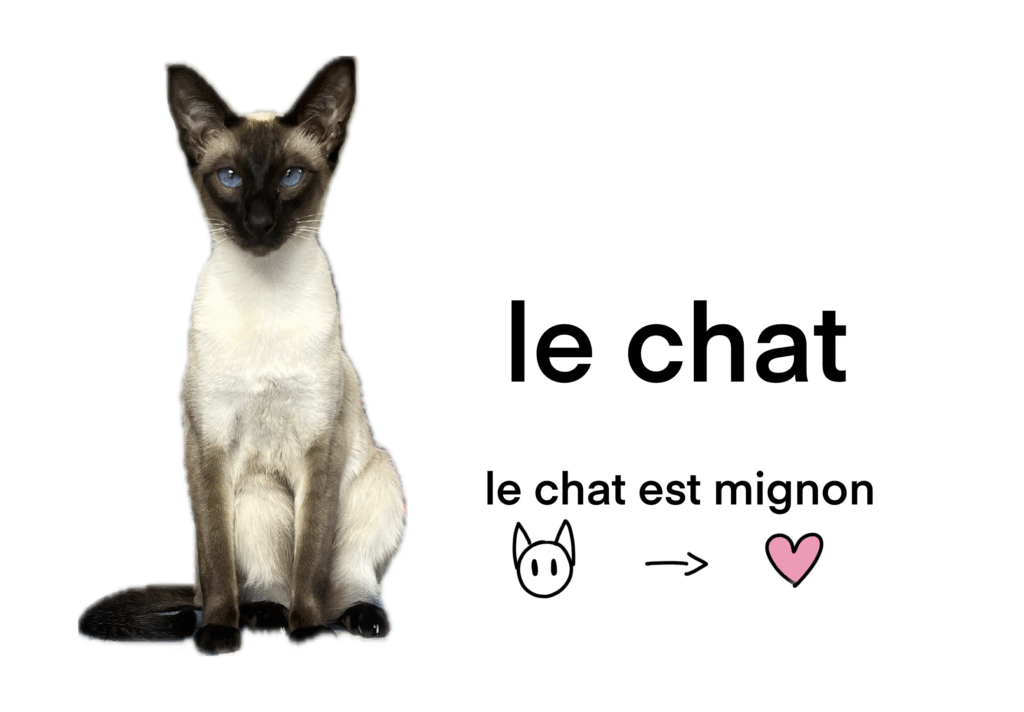
From there, just keep listening and filling in gaps in your knowledge. Make it your goal to understand something simple, like a short story or even a short sentence, and take little steps towards that everyday. As you expand your knowledge, increase the difficulty of the content so it’s just above your skill level. This way, you’re guaranteed to keep making progress.
Step 3. Speaking
You shouldn’t worry about speaking too early on – at least not until you’ve built solid foundations in the language, and that comes by listening. That’s not to say speaking will suddenly click for you after you’ve spent X amount of hours listening to the language… but the more time you spend listening, the less time it’ll take to learn how to speak.
That being said, it’s important to develop good pronunciation habits early on. The key to doing that is exaggeration.
Every language uses different sounds, and thus different muscles in the face. To unlock these sounds, it may help to get a video of someone speaking and imitating the way their mouth is moving. If you feel your face getting tired, you’re on the right track!
When it comes to actually communicating, learning things by heart is a very powerful method. In the last post, I encouraged you to say the French word “pomme” every time you see a 🍎. Well, we can take this a step further and learn a full sentence. Every time you brush your teeth, say “Je me brosse les dents”. This helps you internalise the sentence structure, making it more intuitive to use.
Remember that at the core of all this is communication. Don’t just memorise a sentence and repeat it over and over; wholeheartedly try to convey a message while you speak. This forms connections between the words and their essence, so that when you find yourself in a context where that sentence fits, it’ll pop into your head automatically due to that emotional/visual association.
So what about inventing your own sentences?
Inventing sentences is different from learning how to listen and read, in that it involves more trial and error, ironing out your mistakes, and reinforcing corrections. But if you’ve already familiarised yourself with the language, you’ll have an ear for what sounds right and what doesn’t, which speeds up the process tremendously.
Remember that you can’t force language acquisition to happen; it’s a subliminal process, and we can only encourage it through continuous exposure and practice.
Closing Thoughts
This series was a real exercise in keeping things concise, because there’s just SO much I could say on this topic. I will highly consider writing more language-related posts in the future where I can dive into the details I left out in this rough guide!
I hope this was useful to you and thank you so much for reading.